
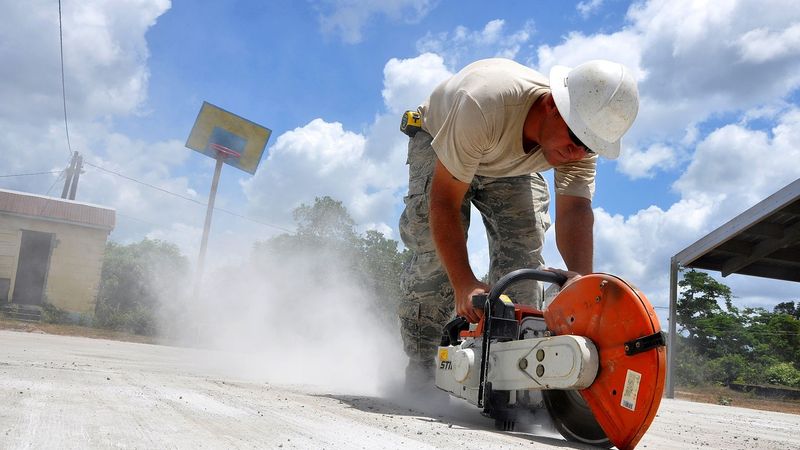
Why Safety Matters in Concrete Cutting
Concrete cutting involves powerful industrial equipment, water management, dust control, and sometimes structural modifications to your home. While a professional concrete cutting contractor handles the technical safety aspects, homeowners play an important role in ensuring the overall safety of the project. Understanding the potential hazards and proper precautions will help you make informed decisions and protect your family and property.
Silica Dust: The Hidden Hazard
The most significant health hazard associated with concrete cutting is respirable crystallite silica dust. Concrete contains silica, and when it is cut, ground, or drilled, microscopic silica particles become airborne. Prolonged inhalation of silica dust can cause silicosis, a serious and irreversible lung disease.
How Professionals Control Silica Dust
- Wet cutting: The industry standard for silica dust control. Water is applied to the blade during cutting, which captures dust particles before they become airborne. This is the primary method used by REDCORE and all reputable concrete cutting companies.
- Vacuum systems: In situations where water cannot be used, specialized vacuum systems with HEPA filtration capture dust at the source.
- Containment: For interior work, the cutting area may be isolated with plastic sheeting to prevent dust migration to other parts of the building.
What Homeowners Should Do
- Stay out of the immediate cutting area during active cutting operations
- Keep children and pets well away from the work zone
- Close doors between the cutting area and the rest of your home
- If you must enter the work area during cutting, wear an N95 or P100 respirator
- After the job is complete, allow dust to settle before cleaning. Wet-mop hard surfaces rather than sweeping, which re-suspends dust particles
Noise Levels
Concrete cutting generates significant noise, typically in the range of 90 to 110 decibels. For reference, a gas-powered lawn mower produces about 90 decibels, and a rock concert is about 110 decibels. Exposure to noise above 85 decibels can cause hearing damage over time.
- Professional concrete cutters wear hearing protection as standard practice
- If you are in or near the work area, wear earplugs or ear muffs
- Warn your neighbors about the expected noise, especially for early morning work
- Keep windows closed in areas adjacent to the cutting to reduce interior noise levels
Need this done professionally?
REDCORE provides free, no-obligation estimates. Same-day service available.
Get Free Estimate →Or call: +1 (413) 666-2026Water and Slurry Management
Wet concrete cutting produces a slurry composed of water, cement particles, and fine aggregate. This slurry is highly alkaline (pH of 12 or higher) and can cause skin irritation and burns with prolonged contact.
- Do not walk through wet concrete slurry with bare feet or in sandals
- If slurry contacts your skin, rinse thoroughly with clean water
- Keep children and pets away from slurry
- Concrete slurry should never be washed into storm drains, as it is an environmental pollutant. Professional concrete cutting companies manage slurry disposal properly.
- For indoor jobs, discuss the water management plan with your contractor before work begins to avoid damage to finished surfaces
Structural Safety Concerns
Cutting through concrete in your home, especially foundation walls and structural slabs, has implications for the structural integrity of the building. This is one of the most important reasons to hire a qualified professional.
- Load-bearing walls: Cutting openings in load-bearing concrete walls requires proper temporary shoring and often a structural header or lintel. A professional contractor will ensure the structure is properly supported throughout the process.
- Post-tensioned slabs: Some concrete slabs contain high-tension cables (post-tensioning). Cutting a post-tensioned cable can cause it to release violently, posing an extreme safety risk. Professional concrete cutters use ground-penetrating radar or other detection methods to locate these cables before cutting.
- Rebar and reinforcement: Cutting through rebar is sometimes necessary and sometimes must be avoided. A professional will assess the reinforcement pattern and plan cuts accordingly.
Choosing a Safe Contractor
The best way to ensure safety on your concrete cutting project is to hire a qualified, experienced contractor. Here are the key qualifications to look for:
- Proper insurance, including general liability and workers' compensation
- Experience with your specific type of project
- Knowledge of OSHA silica dust regulations and compliance
- Professional-grade equipment that is well-maintained
- Willingness to discuss their safety procedures with you
- Positive reviews and references from previous clients
After the Job
Once the concrete cutting is complete, there are a few safety considerations for the period afterward:
- Do not step on or apply weight to freshly cut edges until they have been inspected and any temporary supports are evaluated
- If a structural opening was created, do not remove any temporary shoring until your structural engineer or building inspector approves
- Clean up any remaining dust by wet-mopping, not dry sweeping
- Cover any open penetrations or openings to prevent falls, especially if you have children
At REDCORE Concrete Cutting & Core Drilling, safety is our top priority on every job. We follow all OSHA regulations, use wet cutting as our standard practice, and carry full insurance coverage. If you have safety questions about an upcoming project, do not hesitate to ask. We are happy to walk you through our safety procedures.