Core Drilling vs. Hammer Drilling: Understanding the Difference
When you need a hole in concrete, two primary methods are available: core drilling and hammer drilling. While both get the job done, the quality of the result, the range of hole sizes, and the suitability for different applications vary dramatically between the two. Understanding these differences will help you choose the right method for your project and avoid costly mistakes.
What Is Core Drilling?
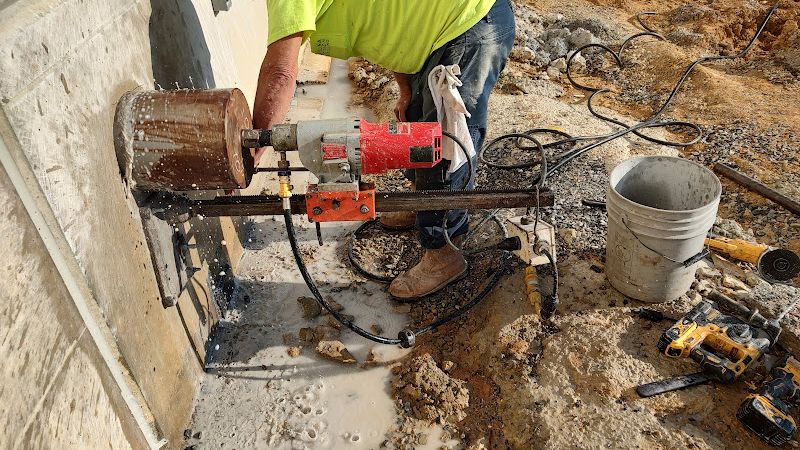
Core drilling uses a diamond-tipped cylindrical bit attached to a specialized drill rig. The bit rotates at a controlled speed, grinding through the concrete in a circular path and removing a solid cylinder (or "core") of material. Water is typically used to cool the bit and suppress dust.
Core drilling is the professional standard for creating clean, precise holes in concrete, masonry, brick, and stone. It can produce holes ranging from 1 inch to over 60 inches in diameter, and can cut through virtually any thickness of concrete, including heavily reinforced sections with rebar.
What Is Hammer Drilling?
Hammer drilling, also called rotary hammer drilling, uses a drill bit that both rotates and delivers rapid hammer-like blows to the concrete. This percussive action breaks up the concrete while the rotation clears the debris. Standard hammer drills and rotary hammers are widely available at hardware stores and rental centers.
Hammer drilling is effective for creating smaller holes, typically up to about 1.5 inches in diameter, for anchors, fasteners, and small conduit. It is a common tool in most contractors' arsenals for everyday drilling tasks.
Need this done professionally?
REDCORE provides free, no-obligation estimates. Same-day service available.
Get Free Estimate →Or call: +1 (413) 666-2026Key Differences Compared
Hole Size Range
- Core drilling: 1 inch to 60+ inches in diameter
- Hammer drilling: Typically limited to 1.5 inches or less
If you need a hole larger than about 1.5 inches, core drilling is your only practical option. Plumbing drain lines, HVAC penetrations, and structural openings all require core drilling.
Hole Quality
- Core drilling: Produces perfectly round, smooth-walled holes with precise dimensions
- Hammer drilling: Can produce rough, chipped edges, especially in brittle or aggregate-heavy concrete
The smooth walls produced by core drilling are especially important for plumbing applications where pipes need to fit snugly and be properly sealed. Rough edges from hammer drilling can make it difficult to install sleeves, grommets, or fire-stop materials.
Vibration and Structural Impact
- Core drilling: Minimal vibration, no impact force on surrounding concrete
- Hammer drilling: Significant percussive force that can crack or damage surrounding material
This is a critical distinction. The percussive force of hammer drilling can cause micro-cracks in the surrounding concrete, which is a serious concern near edges, in thin walls, or in post-tensioned slabs. Core drilling's rotary-only action eliminates this risk entirely.
Rebar Handling
- Core drilling: Diamond bits cut cleanly through rebar when necessary
- Hammer drilling: Cannot effectively penetrate rebar; bits are deflected or damaged
Dust and Debris
- Core drilling: Wet cutting virtually eliminates airborne dust
- Hammer drilling: Produces significant concrete dust, requiring vacuum attachment or respiratory protection
When to Use Each Method
Use Core Drilling For:
- Plumbing drain and supply line penetrations
- HVAC ductwork and mini-split line set holes
- Electrical conduit larger than 1.5 inches
- Dryer vent installations through foundation walls
- Radon mitigation pipe penetrations
- Any hole through reinforced concrete
- Structural or load-bearing walls
- Post-tensioned concrete slabs
Use Hammer Drilling For:
- Anchor bolt holes (typically 3/8 to 3/4 inch)
- Small fastener holes for brackets and hangers
- Tapcon screw pilot holes
- Small conduit penetrations under 1.5 inches
Cost Comparison
Hammer drilling is less expensive on a per-hole basis for small holes, typically costing just the price of a drill bit and your time. Core drilling requires specialized equipment and expertise, with professional core drilling typically ranging from $75 to $400+ per hole depending on the diameter and depth.
However, attempting to use hammer drilling where core drilling is needed often results in damaged concrete, imprecise holes, and rework that costs far more than hiring a professional core drilling service in the first place.
The Bottom Line
For small anchor holes and fastener installations, hammer drilling is perfectly adequate. For anything involving pipe penetrations, HVAC installations, or holes larger than 1.5 inches, professional core drilling is the clear choice. The precision, cleanliness, and structural integrity that core drilling provides are well worth the investment.
REDCORE Concrete Cutting & Core Drilling provides professional core drilling services throughout Springfield, MA and Western Massachusetts. Contact us for a free estimate on your next project.