
Two Methods, Different Applications
Flat sawing and wall sawing are complementary concrete cutting methods that together cover virtually every straight-line cutting need in construction. Flat sawing handles horizontal surfaces, while wall sawing handles vertical and overhead surfaces. Knowing which method applies to your project helps you communicate with your concrete cutting contractor and understand the scope and cost of the work involved.
Flat Sawing (Slab Sawing) Explained
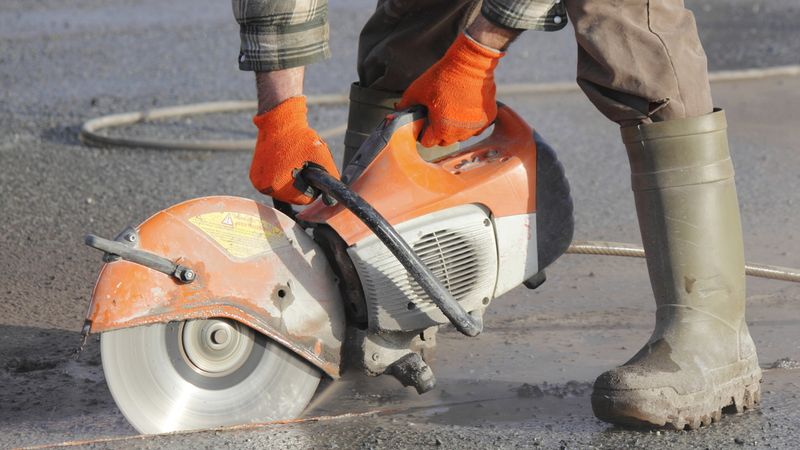
Flat sawing, also called slab sawing or floor sawing, uses a walk-behind saw with a diamond blade that cuts into horizontal concrete surfaces from above. The saw rolls on the concrete surface on wheels, and the blade protrudes through a slot in the chassis to make the cut. The operator walks behind the machine, guiding it along the marked cut line.
Flat Sawing Equipment
- Power source: Gas, diesel, electric, or hydraulic, depending on the application. Electric saws are preferred for indoor work due to zero exhaust emissions.
- Blade diameter: 12 to 72 inches, determining the maximum depth of cut. A 36-inch blade, for example, can cut approximately 14 inches deep.
- Water supply: Connected via garden hose or onboard tank for wet cutting.
- Guidance: The operator follows chalk lines or saw-cut guide marks on the concrete surface.
Common Flat Sawing Applications
- Trench cuts in basement floors for plumbing installations
- Perimeter trench cuts for French drain systems
- Expansion and control joint cutting in slabs, driveways, and parking lots
- Section removal from driveways, sidewalks, and patios
- Garage floor cutting for drain installations
- Decorative scoring patterns in concrete flatwork
- Highway and road surface cutting for repairs
Flat Sawing Strengths
- Efficient for long, straight cuts on horizontal surfaces
- Deep cutting capability (up to 24+ inches with large blades)
- Fast cutting speeds on floor and slab surfaces
- Relatively easy setup compared to wall sawing
- Excellent for repetitive parallel cuts (trenching)
Wall Sawing Explained
Wall sawing uses a diamond blade mounted on a saw head that rides along a track bolted to the concrete surface. Unlike flat sawing, the track system allows the saw to cut on vertical surfaces, overhead surfaces, and at angles. The blade is driven by an electric, hydraulic, or gas-powered motor, and the saw head advances along the track mechanically.
Wall Sawing Equipment
- Track system: Aluminum or steel track sections bolted to the wall surface with concrete anchors. The track guides the blade in a perfectly straight line.
- Saw head: A powered unit that rides the track and drives the diamond blade. The operator controls the blade depth, travel speed, and position from a remote panel or directly at the saw.
- Blade diameter: Typically 24 to 72 inches for wall saws, allowing cuts through walls up to 24+ inches thick.
- Water supply: Essential for cooling and dust control, supplied via hose connection.
Common Wall Sawing Applications
- Egress window openings in foundation walls
- Door openings through concrete and masonry walls
- Window openings (new and enlarged)
- Pass-throughs and utility openings in walls
- Elevator shaft modifications
- Stairway openings in concrete floor slabs (sawing from below or from the top at the edge)
- Selective demolition of concrete wall sections
Wall Sawing Strengths
- Precision straight cuts on vertical surfaces impossible with flat saws
- Track guidance ensures perfectly straight lines
- Handles any wall thickness with appropriate blade diameter
- Clean, flat cut surfaces ready for framing and finishing
- Operator safety, as the saw is mechanically driven rather than hand-guided
Need this done professionally?
REDCORE provides free, no-obligation estimates. Same-day service available.
Get Free Estimate →Or call: +1 (413) 666-2026Key Differences at a Glance
- Orientation: Flat saws cut horizontal surfaces; wall saws cut vertical and overhead surfaces.
- Guidance: Flat saws follow operator guidance along marked lines; wall saws follow a precision track system.
- Setup time: Flat saws require minimal setup; wall saws require track mounting, which adds 30 to 60 minutes to the job.
- Precision: Both produce clean straight cuts, but wall saws achieve superior straightness due to the track guidance.
- Cost: Wall sawing typically costs more per linear foot ($15-$25) than flat sawing ($4-$8) due to the specialized equipment and setup time involved.
When Projects Require Both Methods
Many concrete cutting projects require both flat sawing and wall sawing. A basement renovation, for example, might need flat sawing for plumbing trench cuts in the floor and wall sawing for an egress window opening in the foundation wall. A commercial tenant fit-out might need flat sawing for slab trenches and wall sawing for new door openings. Using a single contractor who offers both services, like REDCORE, provides efficient coordination and cost savings compared to hiring separate specialists.
REDCORE Provides Both Methods
REDCORE Concrete Cutting & Core Drilling maintains a full inventory of flat saws and wall saws to handle any concrete cutting project in Springfield, MA and throughout Western Massachusetts. We will assess your project and deploy the right equipment for each cut, ensuring optimal results and efficient execution. Contact us for a free estimate that covers all of your project's concrete cutting needs.