
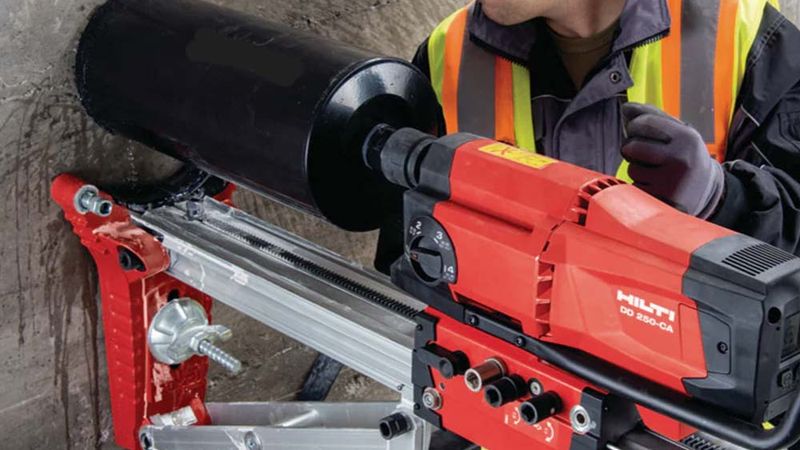
Core Drilling: An Essential HVAC Subcontractor Service
As an HVAC contractor in Massachusetts, you regularly encounter concrete walls, floors, and foundations that stand between you and your ductwork, line sets, and exhaust penetrations. Professional core drilling is the clean, precise way to create these penetrations, and having an efficient working relationship with a reliable core drilling subcontractor is essential for keeping your projects on schedule and your installations looking professional.
At REDCORE Concrete Cutting & Core Drilling, we work with HVAC contractors throughout Western Massachusetts on a daily basis. This guide shares the practical knowledge that will help you order core drilling services efficiently and avoid common problems.
Common HVAC Core Drilling Applications
Ductless Mini-Split Line Sets
Mini-split installations are the most frequent HVAC-related core drilling request we receive. Standard specifications:
- Hole diameter: 3 inches for most single-zone systems, 3.5 to 4 inches for larger units or multi-zone trunk lines
- Typical wall types: Wood frame (simple), concrete foundation (requires professional core drill), brick veneer
- Critical detail: The hole must slope downward toward the exterior at approximately 3 to 5 degrees for condensate drainage
- Verify the manufacturer's specifications for your specific equipment before ordering the core drill
Ductwork Penetrations
Ductwork runs that pass through concrete walls, floors, or fire barriers require core-drilled penetrations:
- Round duct penetrations: Core drill the hole to match the duct diameter plus clearance for insulation and fire stopping, typically 1 to 2 inches larger than the duct
- Common sizes: 6-inch, 8-inch, 10-inch, and 12-inch diameter holes for residential and light commercial ductwork
- For rectangular duct penetrations through concrete, flat sawing or wall sawing may be needed instead of core drilling
Exhaust and Intake Vents
- Dryer vents: 4-inch diameter hole through foundation or exterior wall
- Bath fan exhaust: 4-inch or 6-inch diameter, depending on duct size
- Range hood exhaust: 6-inch to 10-inch diameter, depending on the system
- Combustion air intakes: Sized per mechanical code requirements, typically 4 to 6 inches
- Fresh air intakes for ERV/HRV units: 6-inch to 8-inch diameter
Refrigerant Line Penetrations (Commercial)
Commercial HVAC installations often require multiple large-diameter penetrations through concrete walls and floors for refrigerant piping:
- Sizes range from 4 to 12 inches depending on the system capacity and pipe size
- Multiple penetrations are common, making batch scheduling important
- Fire stopping requirements are typically more stringent in commercial applications
Specifying Your Core Drilling Requirements
Clear specifications save time and prevent errors. When calling to schedule core drilling, provide:
- Exact hole diameter: Specify the finished hole size, not the pipe size. Account for sleeves, insulation, and fire stop materials.
- Number of holes: Provide an exact count. If you are not certain of the final count, give your best estimate and note that it may change.
- Wall or floor material: Poured concrete, block, brick, or a combination. Mention the thickness if known.
- Location: Interior or exterior, floor or wall, height from floor for wall penetrations.
- Slope requirements: For penetrations that must slope for drainage (mini-split line sets, condensate lines), specify the direction and approximate angle.
- Access details: Note any access challenges like narrow doorways, stairs, upper floors, or confined spaces.
Need this done professionally?
REDCORE provides free, no-obligation estimates. Same-day service available.
Get Free Estimate →Or call: +1 (413) 666-2026Scheduling and Coordination Best Practices
Timing in Your Project Sequence
Core drilling should typically happen after rough-in layout is complete but before final duct and line set installation. The ideal sequence is:
- Complete your rough-in layout and mark all penetration locations
- Schedule the core drilling contractor
- After drilling is complete, install sleeves, ductwork, and line sets
- Complete fire stopping and sealing as the last step
Batch Your Holes
The most cost-effective approach is to have all core drilling done in a single visit. Each trip involves mobilization costs, so having three holes drilled in one visit costs significantly less than three separate visits for one hole each. Plan your project so all penetration locations are marked and ready before the core drilling appointment.
Mark Locations Before the Appointment
Mark each hole location clearly with the following information:
- Center point of the hole (use a cross mark)
- Required diameter (written next to the mark)
- Direction of slope if applicable (use an arrow)
- Any special instructions
Be Available During Drilling
Having someone from your team available during the core drilling, even just by phone, helps resolve any questions that arise about hole placement, size, or other details. This is especially important for the first project with a new core drilling subcontractor.
Fire Stopping and Code Compliance
After core drilling, penetrations through fire-rated assemblies must be properly fire-stopped per the Massachusetts building code. While fire stopping is typically the HVAC contractor's responsibility, it helps to specify hole sizes that accommodate the required fire stop materials. A hole that is too tight makes proper fire stopping difficult or impossible.
Build a Trade Relationship with REDCORE
REDCORE Concrete Cutting & Core Drilling offers trade accounts for HVAC contractors in the Springfield, MA area and throughout Western Massachusetts. Benefits of a trade relationship include:
- Priority scheduling for regular customers
- Competitive trade pricing
- Familiarity with your specifications and preferences over time
- Reliable, consistent quality on every job
Contact us to set up a trade account and start working with a core drilling partner that understands the HVAC trade.