
Recognizing When You Need a Concrete Cutting Specialist
As a plumber working across Massachusetts, you have seen it all: cracked sewer lines beneath basement slabs in Springfield, corroded cast iron drains in century-old Worcester triple-deckers, and frozen water services that need rerouting through Pittsfield foundations. Many of these jobs require cutting, drilling, or removing concrete to access or install piping. The question is not whether the concrete needs to be opened, but whether you should do it yourself or bring in a dedicated concrete cutting subcontractor.
The answer depends on the scope of the cut, the type of concrete, the precision required, and the potential consequences of getting it wrong. This guide draws on years of collaboration between REDCORE Concrete Cutting & Core Drilling and plumbing contractors throughout Western Massachusetts to help you make that call confidently.
Jobs You Can Handle with Your Own Tools
Plumbers carry rotary hammers, hole saws, and small demo saws on their trucks for a reason. For limited concrete work, these tools are perfectly adequate:
- Small anchor holes and fastener penetrations: Drilling 1/4-inch to 3/4-inch holes for pipe hangers, strut anchors, and Tapcon fasteners is standard rotary hammer work.
- Holes through concrete block for supply lines: A rotary hammer with a 1-inch or 1-1/2-inch masonry bit can punch through a single wythe of CMU block for copper or PEX supply runs.
- Minor chip-outs: Small sections of thin, unreinforced concrete that need removal for a fitting or cleanout access can be handled with a chipping hammer.
These tasks involve minimal risk to the structure and do not require the precision or depth capacity that professional concrete cutting equipment provides.
Jobs That Demand a Concrete Cutting Specialist
The following scenarios consistently benefit from bringing in a professional concrete cutter. Attempting them with plumbing tools risks damaging the structure, producing imprecise results, and costing more time than you save.
Slab Trench Cuts for Drain Lines
When you need to run a new 3-inch or 4-inch drain line beneath a basement floor, the slab must be trench-cut with parallel saw lines. A professional flat saw with a 14-inch to 24-inch diamond blade cuts clean, straight lines at a consistent depth through 4-inch to 6-inch residential slabs. The concrete between the cuts breaks out cleanly along the saw lines, leaving a neat trench with minimal disturbance to the surrounding slab.
Attempting this with a handheld demo saw produces wavering lines, inconsistent depth, massive dust, and ragged edges that crumble during backfill. The time you spend making rough cuts and cleaning up the mess almost always exceeds the cost of hiring a flat saw operator for a few hours.
Core Drilling Through Foundation Walls
Sewer exits, water service entries, and drain line penetrations through 8-inch to 12-inch poured concrete foundations require diamond core drilling. A professional core drill rig, anchored to the wall or floor, produces a perfectly round, smooth-walled hole in the exact diameter you need. Common plumbing core hole sizes include 4-inch for residential sewer exits, 2-inch for water service entries, and 6-inch for commercial waste lines.
The smooth bore of a core-drilled hole is critical for proper sleeve installation, waterproofing, and fire stopping at the penetration. Holes made with rotary hammers or spade bits produce rough, oversized openings that are difficult to seal properly, creating long-term water infiltration risk in communities like Springfield, Agawam, and Westfield where freeze-thaw cycles punish poorly sealed foundation penetrations.
Cutting Reinforced Concrete
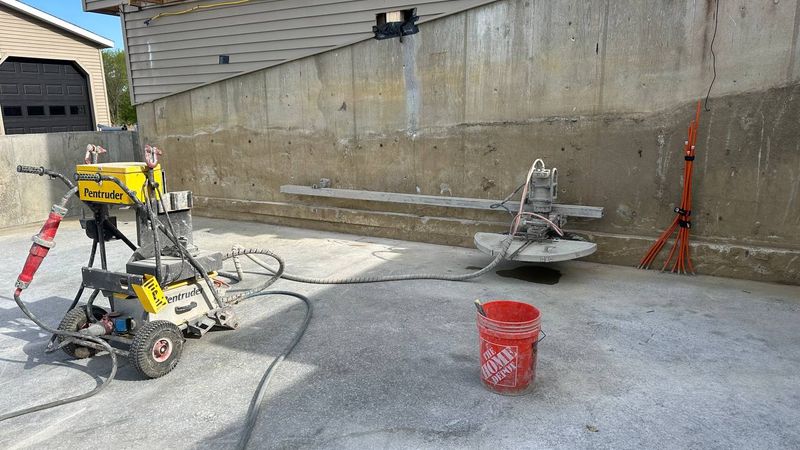
Many commercial and industrial buildings in the Worcester and Springfield areas have reinforced concrete floors with No. 4 or No. 5 rebar on 12-inch centers. Plumbing tools cannot effectively cut through this reinforcement. Diamond flat saw blades and core bits are specifically engineered to cut through both concrete and embedded steel in a single pass, operating at blade speeds of 2,500 to 3,500 RPM with continuous water cooling.
Egress-Related Plumbing in Basement Renovations
When a basement is being finished and needs both egress windows and new plumbing, coordinating with a concrete cutting specialist allows all the slab cuts and wall openings to be completed in a single mobilization. This batch approach saves the plumber and homeowner significant money compared to scheduling separate trips for each task.
Need this done professionally?
REDCORE provides free, no-obligation estimates. Same-day service available.
Get Free Estimate →Or call: +1 (413) 666-2026How to Work Efficiently with Your Concrete Cutter
The plumber-concrete cutter relationship works best when both parties communicate clearly and coordinate schedules:
- Mark everything before the appointment: Use spray paint or lumber crayon to mark trench lines, hole centers, and diameters on the slab or wall. Write the required hole size next to each mark. The concrete cutter should not have to guess what you need.
- Specify pipe sizes, not hole sizes, if unsure: Tell your concrete cutter you need a hole for a 4-inch PVC drain and they will select the appropriate core bit diameter, typically 5 inches, to give you proper clearance for the pipe and sleeve.
- Be present or reachable during drilling: If the cutter encounters unexpected rebar, a utility conflict, or a dimension question, a quick phone call to the plumber resolves it immediately rather than requiring a return trip.
- Batch your work: Accumulate all concrete cutting needs for a job and schedule them in a single visit. The mobilization fee is the same for one hole or ten, so batching dramatically reduces your per-hole cost.
- Coordinate timing: Have the concrete cut completed the day before or the morning of your plumbing rough-in. Open trenches left sitting for days collect debris, water, and curious homeowner traffic.
Cost Considerations for Plumbing Contractors
Understanding concrete cutting costs helps you provide accurate bids that include the subcontractor expense:
- Core drilling: Budget $100 to $250 per hole for standard plumbing penetrations (2-inch to 6-inch diameter through 8-inch to 10-inch walls).
- Trench cuts: Budget $6 to $12 per linear foot for parallel slab cuts, with most bathroom rough-ins requiring 15 to 30 linear feet of total cutting.
- Minimum charges: Most concrete cutting companies have minimum job charges of $300 to $500, so small jobs cost the same as medium ones. Factor this into your bids.
Establishing a trade account with a concrete cutting company like REDCORE often provides preferred pricing, priority scheduling, and consistent quality that simplifies your bidding and project management.
Building a Reliable Subcontractor Relationship
The best plumbing operations in Massachusetts have a concrete cutting company on speed dial. A reliable subcontractor relationship means predictable pricing, responsive scheduling even during busy spring and fall seasons, and a crew that understands your standards and specifications. REDCORE Concrete Cutting & Core Drilling works with plumbing contractors across Western Massachusetts, from Springfield to Pittsfield, and offers trade accounts with preferred rates for regular partners. Contact us to discuss your next project or set up a trade account.