
Two Approaches to Cutting Concrete
When a diamond blade meets concrete, intense heat and friction are generated. Managing that heat is essential for both blade longevity and dust control. The two primary approaches, wet cutting and dry cutting, handle heat management in fundamentally different ways, and each has distinct advantages and limitations.
What Is Wet Cutting?
Wet cutting uses a continuous flow of water directed at the point where the diamond blade contacts the concrete. The water serves three critical functions:
- Cooling: Water absorbs heat from the blade and the cut, preventing overheating that can damage the diamond segments and reduce blade life
- Dust suppression: Water captures concrete dust particles as they are generated, preventing them from becoming airborne. This is the most effective method for controlling respirable silica dust.
- Lubrication: Water reduces friction between the blade and the concrete, resulting in smoother cuts and faster cutting speeds
Wet cutting is the standard method used by professional concrete cutting companies for most applications. It is used with flat saws (slab saws), wall saws, wire saws, and core drills. A water supply, typically from a garden hose or onboard water tank, is connected to the equipment.
What Is Dry Cutting?
Dry cutting uses no water. Instead, the diamond blade is designed to withstand higher operating temperatures, and the blade segments include features that help dissipate heat through air cooling. Dry-cut blades typically have wider gullets (the spaces between segments) that allow air to circulate and cool the blade.
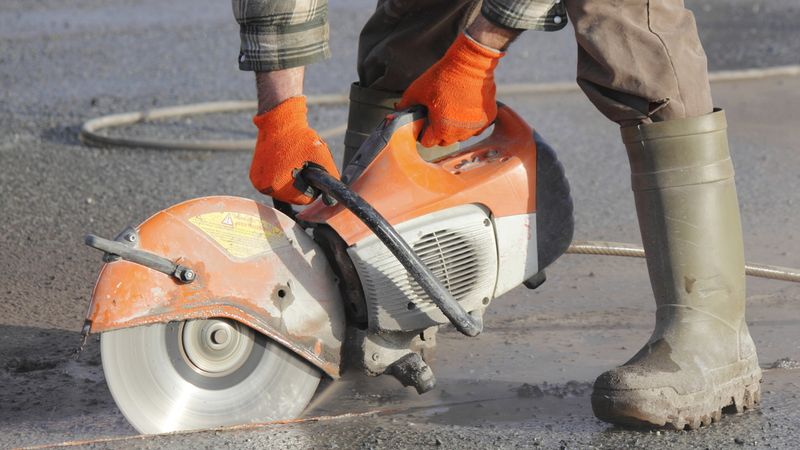
Dry cutting is primarily used with handheld cut-off saws (sometimes called "chop saws" or "quick saws") and angle grinders. It is the method most commonly seen on general construction sites for tasks like cutting concrete block, trimming pavers, and making short cuts in concrete slabs.
Need this done professionally?
REDCORE provides free, no-obligation estimates. Same-day service available.
Get Free Estimate →Or call: +1 (413) 666-2026Detailed Comparison
Dust Control
- Wet cutting: Virtually eliminates airborne silica dust. This is the single biggest advantage of wet cutting and the primary reason it is the professional standard for concrete cutting. OSHA regulations (Table 1 of the silica rule) specifically recognize wet cutting as an effective engineering control for silica exposure.
- Dry cutting: Generates significant airborne dust. When dry cutting is used, additional controls are required, such as integrated vacuum systems with HEPA filtration, and operators must often wear respiratory protection.
Blade Life
- Wet cutting: Diamond blades last significantly longer when used with water, often three to five times longer than the same blade used dry. The water prevents thermal damage to the diamond bond and washes away abrasive slurry that would otherwise accelerate wear.
- Dry cutting: Blades wear faster due to higher operating temperatures and abrasive buildup. Operators must make intermittent cuts, allowing the blade to cool in between, which slows the overall process.
Cut Quality
- Wet cutting: Produces cleaner, smoother cuts with less chipping and spalling at the cut edges. The water lubrication and cooler blade temperature contribute to a more precise cut.
- Dry cutting: Can produce rougher edges, especially in harder concrete or when the blade overheats. However, for many applications like cutting control joints or trimming blocks, the cut quality is perfectly acceptable.
Speed
- Wet cutting: Faster continuous cutting speed because the blade can operate at full speed without overheating. Professional flat saws and wall saws cut at consistent, efficient rates.
- Dry cutting: Slower overall due to the need for periodic cooling breaks. Operators typically cut for 30 to 60 seconds, then allow the blade to spin freely for a similar period to cool down.
Portability and Setup
- Wet cutting: Requires a water source and creates slurry that must be managed. Setup takes longer, especially for wall sawing and core drilling where track or rig mounting is involved.
- Dry cutting: No water supply needed, no slurry to manage. Equipment is generally more portable and quicker to set up. This makes dry cutting ideal for small, quick jobs in locations without water access.
When Each Method Is Used
Wet Cutting Is Preferred For:
- All professional flat sawing and slab cutting
- Wall sawing for openings and structural cuts
- Core drilling through floors and walls
- Any indoor concrete cutting where dust control is essential
- Long cuts where blade life and cut quality matter
- Any project where OSHA silica compliance is required
Dry Cutting Is Appropriate For:
- Short cuts with a handheld saw (cutting rebar, small block cuts)
- Locations with no water access and no feasible way to supply water
- Small decorative cuts in concrete pavers or landscape blocks
- Emergency or quick-response cutting where setup time is critical
REDCORE's Standard Practice
At REDCORE Concrete Cutting & Core Drilling, wet cutting is our standard operating method for virtually every job. The superior dust control, longer blade life, and cleaner cuts make wet cutting the professional choice for our clients' projects. We manage water supply and slurry containment as part of every job, so you can expect a clean, safe work environment. Contact us to learn more about our concrete cutting services in Springfield, MA and Western Massachusetts.